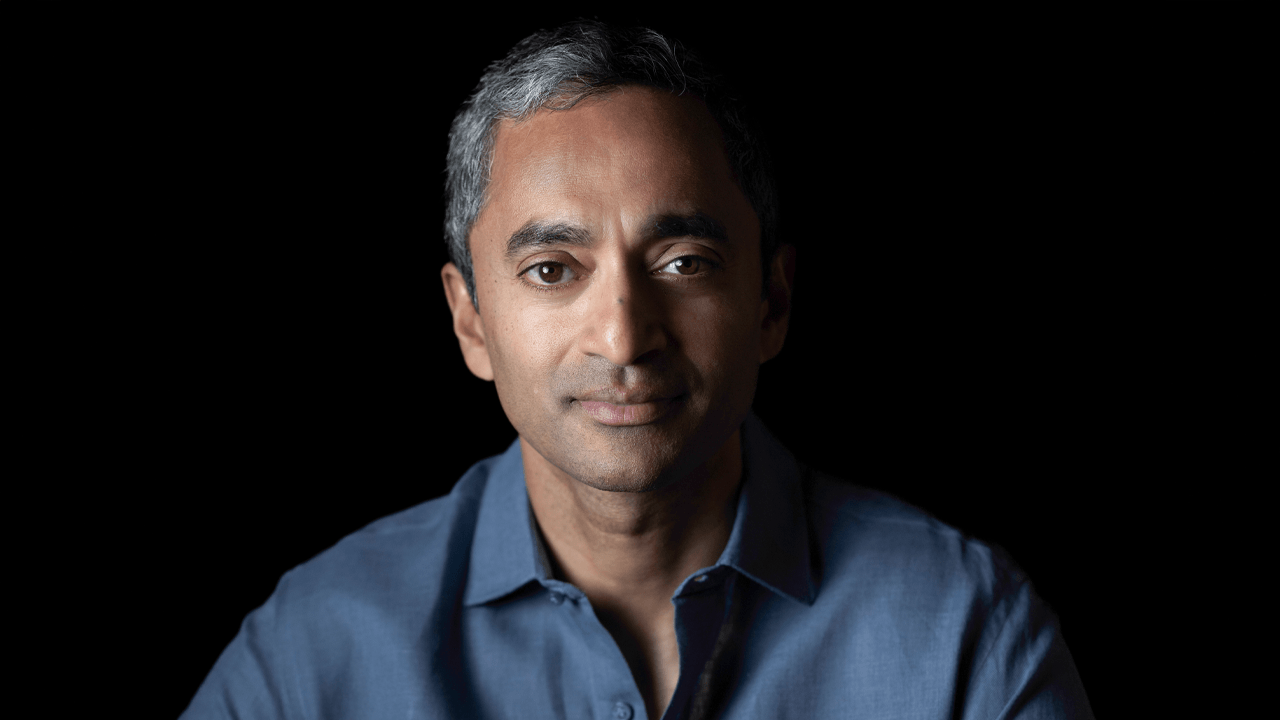
Billionaire investor Chamath Palihapitiya warned that artificial intelligence could eventually undermine the cryptographic security underlying Bitcoin, triggering disagreement from Strategy founder Michael Saylor, Blockstream CEO Adam Back, and Stacks co-founder Muneeb Ali.
In an essay published November 27 titled "Will Bitcoin inevitably go to zero?," Palihapitiya expanded on concerns he raised approximately one month earlier during a podcast appearance. He argued that AI could dramatically accelerate the discovery of mathematical techniques capable of breaking modern cryptography.
The Core Argument
Palihapitiya contended that the interval between establishing cryptographic security assumptions and discovering methods to invalidate them could narrow significantly. He wrote that while digital systems are considered secure when the fastest known method for breaking them would take impractically long periods, new mathematics "uncovered by rapidly unearthing the mathematics beneath a problem, could reveal novel methods that cut the work needed to break a lock by many orders of magnitude."
To illustrate his point, Palihapitiya referenced the history of RSA cryptography, introduced in 1977. One RSA inventor initially estimated that factoring a 125-digit number would require 40 quadrillion years. By 1994, volunteers had factored a larger 129-digit number in eight months using improved algorithms and greater computational resources.
Palihapitiya cited mathematician Levent Alpöge's collaboration with Anthropic's Claude on a proposed proof of the Riemann hypothesis, a mathematical conjecture from 1859. He also referenced Anthropic's disclosure that Claude discovered a computational attack against a reduced seven-round version of AES-128 that operated 200 to 800 times faster than the previous best method.
Bitcoin's Architecture
Palihapitiya acknowledged Bitcoin's combination of existing cryptographic primitives, economic incentives, and decentralized ledger maintenance. He noted that Bitcoin incorporates the SHA-256 hash function, elliptic-curve digital signatures, and a proof-of-work consensus mechanism rather than introducing a new type of cryptographic lock.
His central concern centered on whether decentralized participants could coordinate defensive upgrades before a sufficiently powerful attack materialized. During an October podcast appearance, Palihapitiya disclosed that he had shifted his direct bitcoin exposure into equity through Digital Currency Group years earlier, citing storage and security concerns.
Industry Response
Muneeb Ali, Stacks co-founder and distributed systems researcher, challenged Palihapitiya's assessment of Bitcoin's upgrade capabilities, suggesting that future-proof cryptography could be implemented more quickly than the investor believed.
Michael Saylor approached the disagreement from an economic perspective, distinguishing Bitcoin as a monetary protocol from its software implementation. "Bitcoin isn't software," Saylor stated. "It's an economic protocol like Arabic numerals, sexagesimal time, the metric system, and English. If AI breaks encryption, all digital commerce is at risk. The solution is an upgrade to next generation encryption."
Adam Back, Blockstream CEO and Hashcash inventor, offered a brief response: "Generic speculation. P!=NP, EC unaffected, RSA unaffected. AI is not magic."
Other industry figures questioned aspects of Palihapitiya's thesis. Market analyst Bob Loukas and Bitcoin Investment Group CEO Eric Weiss also dismissed the warning, with Weiss questioning Palihapitiya's investment track record. Strive CEO Matt Cole challenged the binary nature of the argument, suggesting that if the thesis proved wrong, it would not necessarily indicate the opposite outcome.
The Underlying Question
The controversy highlighted a distinction between mathematical discovery and deployable cryptographic attacks. While AI may accelerate both offensive research and defensive engineering, Bitcoin's vulnerability to such threats remains a hypothetical scenario rather than an established mathematical certainty. The unresolved question is whether decentralized coordination can keep pace with increasingly capable machines.