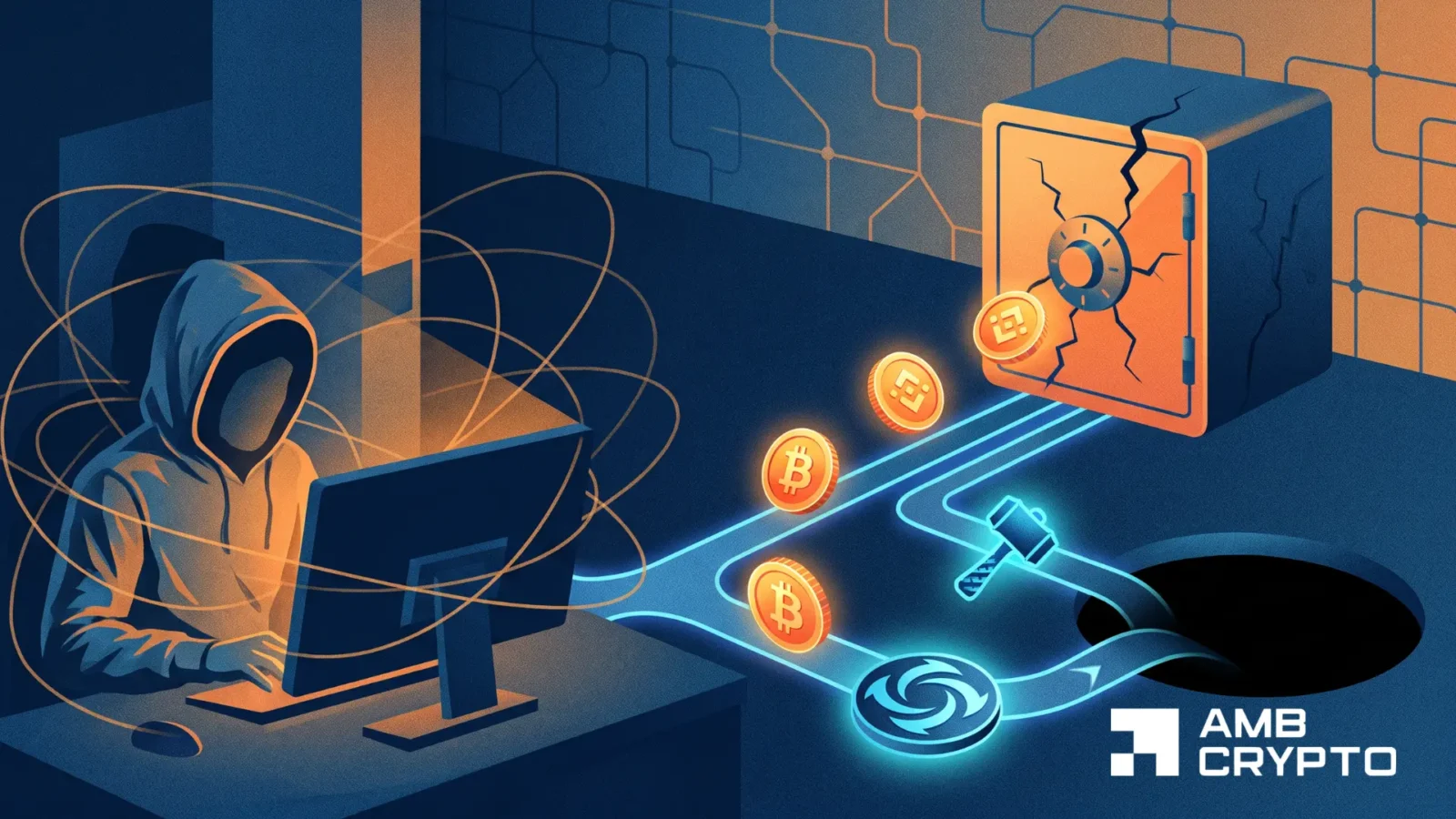
Cryptocurrency stolen in the October 29 Binance hack is being funneled through multiple services by North Korean hackers attempting to obscure the transaction trail, according to blockchain analysis firms Chainalysis and Elliptic.
Over $600 million in stolen assets have passed through THORChain, a decentralized exchange protocol that does not require Know Your Customer (KYC) identity verification or censor transactions. An additional $342 million has moved through CoinJoin, a transaction-mixing service designed to conceal transaction patterns.
Why THORChain Became a Conduit
THORChain's lack of identity verification requirements and transaction censorship makes it attractive to bad actors. The protocol allows users to swap cryptocurrencies without providing identification, creating minimal friction for laundering operations.
According to TRM Labs estimates, THORChain has generated approximately $1 million in fees from swaps associated with the stolen funds.
Law Enforcement Response
The FBI identified wallet addresses linked to the attackers and urged cryptocurrency service providers, including THORChain operators, to block associated transactions. Despite this warning, THORChain continued processing transactions tied to the laundering effort.
The U.S. Department of Justice filed a forfeiture action to recover more than $1.1 billion in stolen cryptocurrency.
Ongoing Challenges
Token issuers have frozen approximately $2.85 billion of the stolen funds. However, the remaining assets remain in circulation. To convert cryptocurrency into fiat currency, hackers must route funds through additional services such as over-the-counter brokers, creating additional opportunities for law enforcement to identify and freeze assets.
TRM Labs estimates the laundering operation could continue for months or even years.