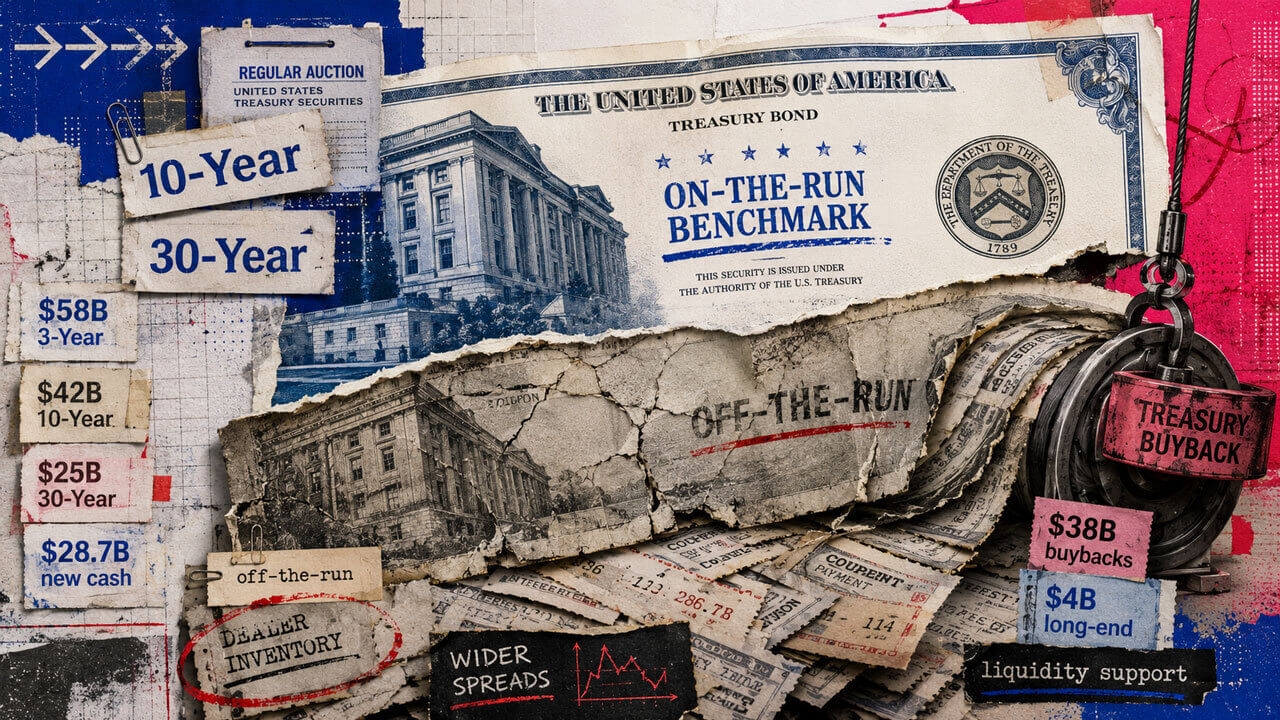
The US Treasury expects to borrow $739 billion between July and September while simultaneously purchasing selected older bonds through buyback operations. Though both transactions involve the Treasury, they operate on separate ledgers and serve different purposes: auctions finance government operations and establish liquid market benchmarks, while buybacks retire or manage older debt issues.
Treasury's August borrowing estimate assumes a $950 billion cash balance at the end of September, with an additional $628 billion projected for borrowing from October through December. The department authorized up to $38 billion in liquidity-support purchases and $25 billion in short-dated cash-management purchases during the current quarter.
On August 19, Treasury expanded its buyback program, doubling the maximum size of each operation in the 10-to-20-year and 20-to-30-year bond sectors from $2 billion to at least $4 billion for operations running September 9 through November 4. The regular auction schedule remains intact, with purchased debt generally replaced through new issuance, allowing the government to conduct both sales and purchases during the same financing cycle.
How Treasury Auctions and Buybacks Work
Treasury sells bills, notes, bonds, floating-rate notes, and inflation-protected securities to fund the gap between federal receipts and spending. New securities in a maturity bucket become the on-the-run benchmark issue, typically trading more frequently and with tighter bid-ask spreads than comparable older bonds. Once replaced by a newer security, the previous benchmark becomes off-the-run while retaining the same federal guarantee and payments.
Buyback operations target older off-the-run securities where trading has become less liquid. Treasury announces eligible maturity buckets and maximum purchase amounts before each operation, with approved counterparties submitting competitive offers. The department can accept less than the published maximum when prices appear unattractive.
Cash Flow and Market Effects
Auction proceeds and buyback payments flow through the Treasury General Account, the federal government's operating account at the Federal Reserve. When private buyers settle a Treasury auction, money moves toward the TGA and reserve balances in the banking system generally decline. Conversely, federal spending and Treasury buybacks send funds back toward private accounts, generally adding reserves.
Treasury buybacks differ from Federal Reserve quantitative easing because the Fed creates reserve balances when purchasing securities, while Treasury spends from its existing TGA balance and replenishes it through taxes or debt sales. Repurchased securities are retired rather than held in a monetary-policy portfolio.
Long-dated bonds are the most price-sensitive securities in the regular auction schedule. Older 20- and 30-year issues can experience reduced trading demand once a fresh benchmark emerges, consuming more dealer risk capacity when yields move sharply. The doubled per-operation ceiling gives Treasury greater flexibility to purchase attractive offerings while retaining the option to stop below the cap.
Broader Market Implications
Treasury's formal objective is ordinary market functioning, and the agency has not announced a target for long-term yields. The connection between Treasury operations and broader asset classes runs through reserve availability, long-term yields, collateral markets, and dealer capacity. Well-received long-bond buybacks could ease localized dislocations and lower sources of cross-market strain, while heavy auction weeks or rapid TGA buildup could absorb available cash simultaneously.
The larger long-end buyback operations begin September 9, with the next quarterly refunding announcement scheduled for November 4. Accepted purchase amounts, offered prices, demand for new benchmarks, and the TGA path around settlement dates will indicate how effectively Treasury manages liquidity in older bonds while continuing to finance government operations through new issuance.